 |
 |
Bobbin Lace History
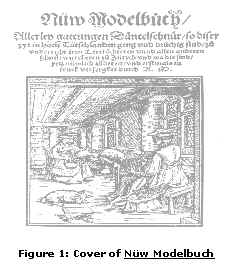
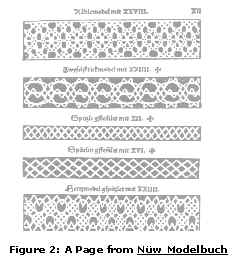
Bobbin lacemaking is thought to have started in the fifteenth century in Italy and Flanders but there was little use of any type of lace in portraits or mention in records until after the first half of the sixteenth century. R.M., the author of the bobbin lace pattern book titled Nüw Modelbuch, does mention in the pattern book that bobbin laces where brought into Germany in 1536 by merchants from Venice and Italy so it seems that bobbin lace was made prior to the first half of the sixteen century, but was not widely used. Not until the third quarter of the sixteenth century did portraits and records begin to show clear, if small, examples of lace.
Bobbin lace at first was closely linked to braids and other forms of passemeterie (trim) used in the early sixteenth century and was frequently made with silk and metals (gold or silver wound around silk cores). Bobbin lace became a technique by which metal threads in particular could be easily manipulated. It was the manufacture of the silk and metal braids to be used on rich materials for furnishing and dress that drove the development of bobbin lace. It was these metal bobbin laces which first appeared in royal and other accounts throughout Europe.
In a parallel development, white linen bobbin lace was associated from the beginning with domestic linen. Bobbin lace was at first used for trimming chemises and shirts and soon afterwards it was used to trim collars, cuffs, caps, fronts and bodies of dresses, napkins, sheets, pillowcases and coverlets. It was the use of white bobbin lace to trim fine cutwork and needlelace that seems to have led to its fashionable acceptance during the last quarter of the 16th century. Eventually, bobbin lace started to be used as a cheaper alternative to produce the same effect as cutwork and needlelace.
Unfortunately, there were only two pattern books which where published in the sixteenth century that where devoted to bobbin lace. These two books where both published around 1560. The first, Le Pompe, was published in two volumes. The first was published in 1557 in Venice with the second being published in 1560. Nüw Modelbuch was printed in Zurich (Switzerland) in 1561.
Bobbin lace was most commonly referred to as bone lace in the sixteenth century. Some speculate that this term was used since the pins and bobbins used to make the lace where possibly made out of bone. Unfortunately there are no written instructions on how bobbin lace was made in the sixteenth century though, but Nüw Modelbuch’s cover is a woodcut displaying lacemakers at work. As shown in this woodcut, the tools used then (a lace pillow, bobbins, and pins) are the same tools bobbin lacemakers use even today.
|
|